
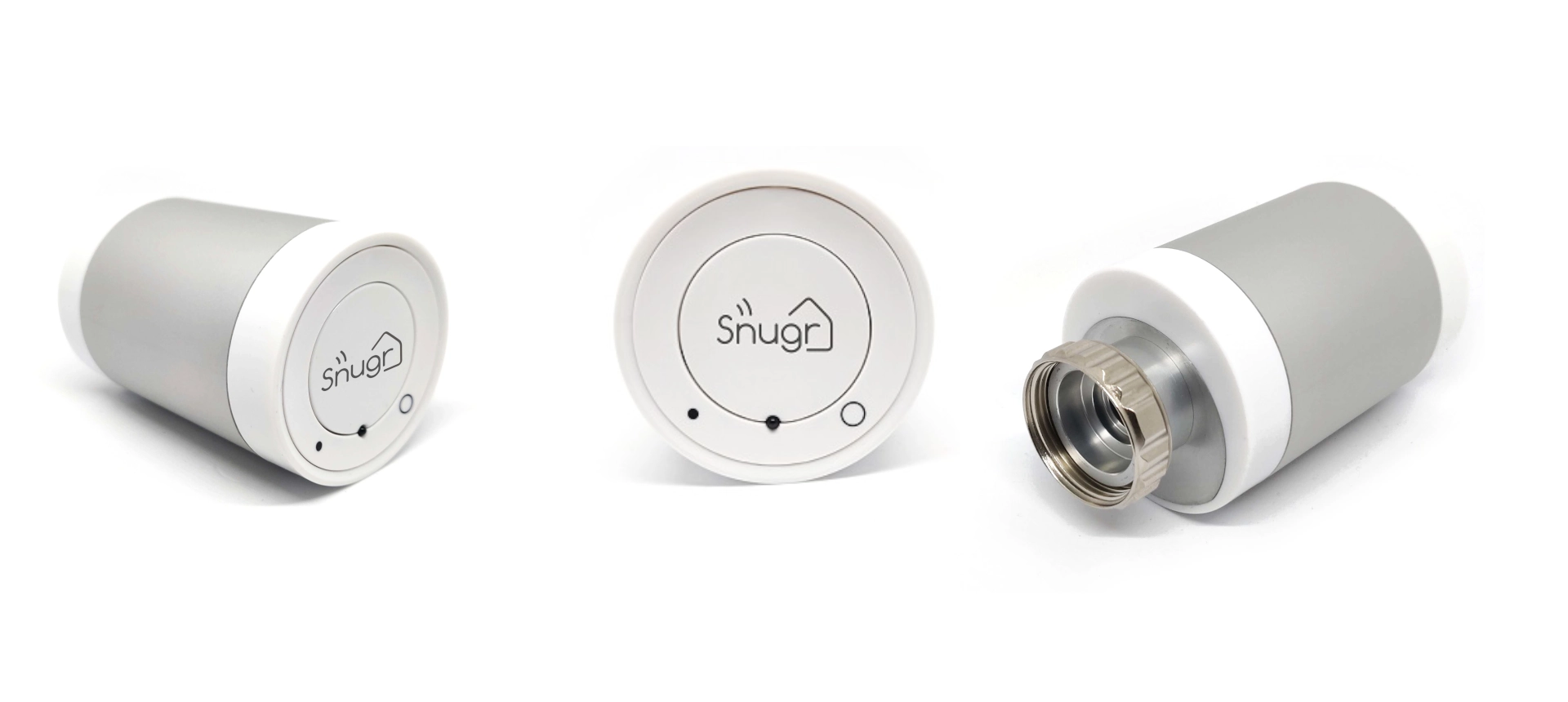
The right temperature, at the right time, in every room. The Snugr Easypelt® connected thermostatic radiator valve controls your heating remotely and recharges itself: no batteries to replace.
A valve that recharges itself thanks to the Seebeck effect
Most connected valves run on batteries that have to be replaced once or twice a year on every radiator. Across an entire building, that's a never-ending chore.
The Easypelt valve is different. It harnesses the Seebeck effect (the reverse of the Peltier effect): the temperature difference between the hot water in the heating circuit and the air in the room produces the electricity the valve needs.
- No batteries to buy or replace
- No waste: a real environmental plus
- No maintenance linked to battery changes
- No power cabling
Intelligently managed autonomy: summer mode
During the heating season, the heat from the circuit recharges the valve regularly. When you switch on summer mode and turn off your boiler, instead of communicating with the optimiser every 10 minutes, the valve only checks in every 8 hours. This preserves its energy reserve throughout the summer, with no action required on your part.
And the USB port? It's only there as a last resort. If, over a very long period, the energy input hasn't been sufficient, a simple recharge via the USB port brings the valve back up to full — without replacing a single component. In normal use, you'll never need to touch it.
Why choose the Easypelt valve?
Smart control, room by room
The Easypelt valve communicates with the Snugr optimiser via EnOcean radio waves — no Wi-Fi, no cabling:
- the optimiser sends the target temperature according to your schedules;
- the valve sends back the measured temperature and its mechanical status;
- the algorithm learns the thermal inertia of each room to reach the right temperature at the time you want, not once the meeting is already over.
Automatic anti-seizing: the valve moves its pin regularly to stop it from seizing, including after long periods of inactivity such as summer. The result: less risk of blockage and significantly less maintenance on your radiators.
Fits most radiators
The Easypelt valve uses the M30 × 1.5 connection, the most common standard (Comap, Heimeier, Oventrop, Honeywell, Jaga, Buderus, Siemens…). For other valve bodies, metal adapters are available, notably for:
- Danfoss RA, RAV, RAVL
- Giacomini
- Comap (Diana) — M28 × 1.5
- Herz — M28 × 1.5
- Vaillant, Oventrop, TA, …
Not sure of your model? Our team will check compatibility with you.
For which buildings?
Because it has no battery and cannot be adjusted directly, the Easypelt is particularly suited to buildings with variable occupancy and to public spaces: schools and nurseries, municipalities and public buildings, hospitals and medical practices, offices and the tertiary sector, hotels, and of course in the homes of private individuals who want to cut their heating bill, improve their comfort, reduce their environmental footprint and who would rather not change batteries twice a year.
Up to 40% savings — and grants to get there faster
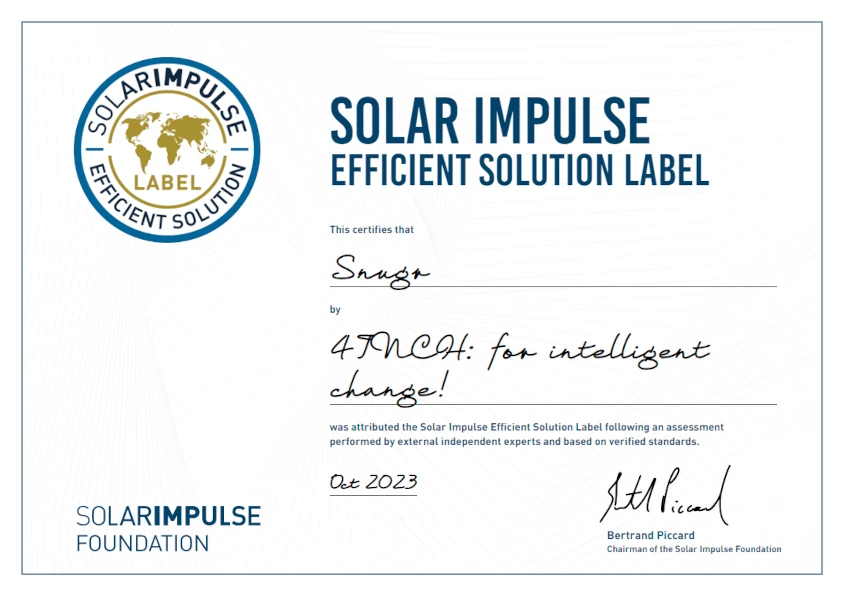
Our customers typically see 20 to 40% savings on their heating bill. In Brussels and Wallonia, energy grants support the installation of connected thermostatic valves and shorten your return on investment. Snugr also carries the “Solar Impulse Efficient Solution” label.
With Snugr, I heat smart!
Request your free, no-obligation quote. Our team will advise you on the solution best suited to your building.
Easypelt® is a registered trademark of 4INCH s.a.
Frequently Asked Questions (FAQ)
Does the Easypelt valve need batteries?
No. It recharges itself thanks to the Seebeck effect, using the heat from the heating circuit. In summer, it switches to an energy-saving mode (communicating every 8 hours) to preserve its autonomy. A USB port is provided only as a last resort, if the energy input has been insufficient over a very long period.
Is any work needed to install it?
No. The valve screws on in place of your existing thermostatic head, with no plumbing or cabling.
On which radiators can I install it?
On all standard M30 × 1.5 connections, and on most other models thanks to our metal adapters. We check compatibility with you.
How is the temperature set?
Remotely, via the Snugr web interface. The valve itself cannot be adjusted directly, which prevents unwanted tampering.
Does the anti-seizing really reduce maintenance?
Yes. The valve regularly moves its pin to prevent it from seizing, which significantly reduces maintenance work on your radiators.
Which communication protocol does the valve use?
The Easypelt valve uses the EnOcean radio protocol at 868.3 MHz. This non-proprietary protocol is known for its low energy consumption, its security and its low impact, in terms of radio waves, on occupants. Indeed, our valves transmit for only a few milliseconds (<10 ms) every 10 minutes.
What are the valve's dimensions?
ø 55 x 95 mm deep
Does the heating keep working without an internet connection?
Yes. The optimiser continues regulating according to the latest schedules; only remote access requires internet.